Getting a prescription filled used to mean one thing: walk into a pharmacy, hand over the paper, pick up your medicine, and leave. That transaction still happens every day. But for many patients, especially those managing chronic conditions, recovering from surgery, or caring for an elderly parent, that single step is rarely enough.
The gap between getting a prescription and actually getting better is wider than most people realise. It involves understanding how to take medicine correctly, knowing when something is not working, keeping up with follow-up tests, and sometimes just having someone to call when you are confused at 10 PM. That is where full-service pharmacy care becomes something worth talking about.
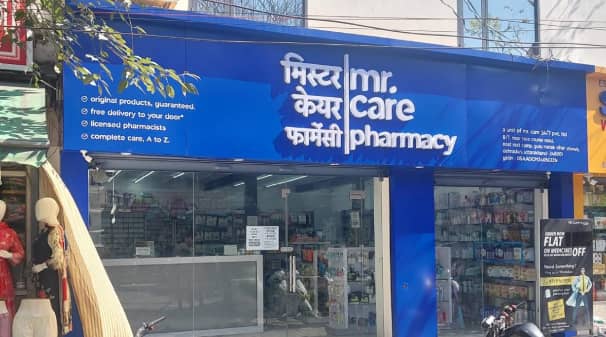
Mr Care Pharmacy was built around the idea that a pharmacy should cover the whole journey, not just the dispensing counter. Here is a look at how that actually works in practice.
Why Pharmacy Home Delivery in Dehradun Is Changing Patient Habits
Dehradun has a geography that makes healthcare access uneven. The older parts of the city, the hillside neighbourhoods, and the peri-urban areas around Rajpur Road or Clement Town all present real obstacles for people who need regular medication. For someone with knee pain, a blood pressure condition, or post-operative care requirements, travelling to a pharmacy three times a week is not just inconvenient. It becomes a genuine barrier to adherence.
Pharmacy home delivery in Dehradun addresses this directly. When medicines arrive at your door on schedule, you are far more likely to take them on time and in full. The evidence on medication adherence is well-documented. According to the World Health Organization, adherence to long-term therapies averages just 50 percent in developed countries, with the number being lower in many lower-income settings. One of the most consistent factors affecting adherence is access and convenience.
Mr Care Pharmacy offers structured home delivery for both acute and chronic prescriptions, with options for scheduled monthly deliveries so patients on long-term medication do not face stock gaps. That is the kind of service that supports actual treatment outcomes, not just a commercial convenience.
The Pharmacist as a Healthcare Partner, Not Just a Dispenser
Pharmacists are among the most accessible healthcare professionals in any community. Unlike doctors, they typically do not require appointments, they are often available six or seven days a week, and they can answer questions quickly. Yet this accessibility is frequently underused.
At Mr Care Pharmacy, trained pharmacists are available to answer questions about drug interactions, explain dosage instructions clearly, flag potential side effects, and advise on when a symptom warrants a doctor visit rather than an over-the-counter fix. This kind of guidance matters more than most patients realise.
Common Situations Where Pharmacist Guidance Makes a Real Difference
- A patient on blood thinners wants to take an over-the-counter painkiller
- An elderly person is prescribed a new antidepressant alongside existing diabetes medication
- A caregiver is unsure whether a child’s dose should be adjusted for weight
- A patient finishing a course of antibiotics wonders if they need to complete it if they feel better
None of these questions require a full doctor’s consultation. They require someone knowledgeable, available, and willing to explain things without rushing. That is what a well-trained community pharmacist can do, and what separates a full-service pharmacy from a medicine vending point.
Diagnostics and Lab Services: Closing the Loop on Treatment
Most treatment plans involve more than just taking medicine. They involve monitoring. A patient on thyroid medication needs periodic TSH tests. Someone managing diabetes needs regular HbA1c and fasting glucose checks. A person on blood pressure medication benefits from lipid profile monitoring. Without these tests, neither the patient nor the doctor can tell if the treatment is working.
The challenge is that diagnostic services and pharmacy services are usually separate. A patient fills a prescription at one place, then has to find a diagnostic centre, book an appointment, travel there, return later for results, and finally bring those results back to their doctor. Every extra step is a point where patients drop off.
Mr Care Pharmacy has worked to close this gap by integrating access to diagnostic services alongside its pharmacy offerings. Patients can schedule home sample collection for a range of routine tests, with results accessible digitally. This matters especially for older patients, those with mobility limitations, or anyone managing a condition that requires frequent monitoring.
Tests Typically Coordinated Through the Platform
- Complete blood count (CBC)
- Blood glucose (fasting and post-prandial)
- Thyroid function tests (TSH, T3, T4)
- Lipid profile
- Liver and kidney function tests
- Urine routine analysis
When a patient can get their medicine delivered and arrange their lab test from the same trusted source, care becomes less fragmented. That continuity is often what keeps people engaged with their own treatment.
Customer Support That Actually Supports: What Good Service Looks Like
The phrase “customer support” in healthcare is often euphemistic. In practice it means a call centre that reads from a script, a chatbot that cannot answer real questions, or an email address that takes three days to respond. This is particularly damaging in a healthcare context where timing matters.
Good pharmacy support means something different. It means being reachable when a delivery is delayed and a patient cannot miss their evening dose. It means helping someone understand a confusing invoice. It means flagging when a prescription refill is due before the patient runs out. It means following up after a first order to check that everything arrived correctly and that the patient knows how to use what they received.
The support function at Mr Care Pharmacy is built to do exactly this. Staff are trained to handle medication-related queries, not just logistics ones, and to refer patients to a pharmacist or escalate to a clinical contact where necessary. The goal is that no patient ends up confused, delayed, or without their medication because of a process failure.
Managing Chronic Conditions: Where the Full Service Model Pays Off
The real test of any pharmacy model is how it performs for patients with chronic conditions. These are the people who interact with the healthcare system most frequently: diabetics, cardiac patients, those managing hypertension, hypothyroidism, or arthritis. They refill prescriptions monthly, they need regular tests, and they often have multiple medications that need careful management.
For these patients, the fragmented model where medicine, diagnostics, and advice each come from a different source creates real problems. Doses get missed. Tests get skipped. Drug interactions go unchecked. Refills run out at inconvenient times.
A joined-up approach changes this. When pharmacy home delivery in Dehradun is paired with scheduled diagnostic monitoring and a pharmacist who knows a patient’s medication history, the result is a more consistent, safer treatment experience. A patient with Type 2 diabetes, for instance, benefits from timely insulin or metformin refills, quarterly HbA1c tests arranged at home, and a pharmacist they can call when they notice an unusual reading.
This is what end-to-end care in a pharmacy context actually means. It is not a marketing phrase. It is a set of connected services that make the difference between a patient who stays on track and one who does not.
Online Medicine Ordering in Dehradun: How the Process Works
One of the most common questions people have about online pharmacy services is simply: how does it work? Here is a straightforward breakdown.
- Upload your prescription. A valid prescription from a registered medical practitioner is required for scheduled medicines. Over-the-counter medicines can be ordered without one.
- A pharmacist reviews the order. Before dispatch, the prescription is verified. Any concerns about interactions or dosage are flagged at this stage.
- Medicines are packed and dispatched. Packaging follows standard guidelines for temperature-sensitive items where applicable.
- Delivery to your address. Patients can track their order and receive confirmation on delivery.
- Follow-up and refill reminders. For repeat prescriptions, the system flags upcoming refill dates so patients do not run short.
For patients who prefer speaking to someone directly rather than navigating an app, phone-based ordering is also available. The goal is to remove friction, not add it.
What Genuine Patient Care Looks Like in a Pharmacy Setting
There is a difference between a pharmacy that stocks medicines and one that thinks about the person who will take them. The former is a supply chain. The latter is a healthcare partner.
Genuine care shows up in the small things. It is the pharmacist who explains that a new antibiotic should be taken with food to reduce stomach irritation. It is the delivery team that calls ahead to confirm someone will be home to receive a refrigerated item. It is the support staff who notice that a patient has not refilled a critical medication and follows up proactively.
These are not extraordinary gestures. They are what thoughtful, well-organised pharmacy care looks like when it is done consistently. Mr Care Pharmacy has tried to build these behaviours into its standard operating process rather than treat them as exceptional.
The result, for patients who use the service regularly, is a relationship with their pharmacy rather than a transaction. For anyone managing a long-term condition, that kind of continuity is worth something.