There is a moment most people have experienced at a pharmacy. You are standing at the counter, maybe anxious about a new diagnosis, maybe exhausted from caring for a sick child, and the person behind the counter hands you a bag, takes your money, and moves on to the next customer. Transaction complete. Problem solved. Except it does not really feel that way.
This gap between what pharmacy service often is and what it could be is exactly why a different approach to customer-centric pharmacy services matters so much right now. People are not just picking up pills. They are navigating some of the most stressful moments of their lives, and the pharmacy is often the most accessible point of contact in the entire healthcare system.
So the question worth asking is: what happens when a pharmacy actually treats people that way?
The Problem With Pharmacy as Pure Retail
For decades, the retail pharmacy model has operated on volume. More prescriptions filled, faster turnover, lower cost per transaction. That model made sense for shareholders. It made less sense for the person standing at the counter.
When profit drives every decision, the experience starts to reflect that. Pharmacists get pulled toward registers instead of consultations. Generic advice replaces specific guidance. The pharmacist who might catch a dangerous drug interaction is too busy processing the queue to ask the right questions.
This is not a criticism of individual pharmacists, most of whom chose the profession because they genuinely want to help people. It is a structural problem. When the business model prioritizes speed and volume, the human part of the work gets squeezed out.
The result is a system where people often leave a pharmacy knowing less than they should about the medications they are taking.
What "People Over Products" Actually Looks Like
The phrase sounds nice on a mission statement. But what does it mean in practice?
It starts with time. A pharmacy that puts people first does not treat a five-minute consultation as a cost. It treats it as the service itself. When someone picks up a prescription for the first time, they should leave understanding what the medication does, how to take it correctly, what side effects to watch for, and what questions to bring back to their doctor.
It also means the staff knows your name. Not because of a loyalty program, but because they have actually talked to you. There is a difference between a pharmacy that stores your purchase history and a pharmacy that remembers you had a bad reaction to a certain class of antibiotics last year. One is a database. The other is a relationship.
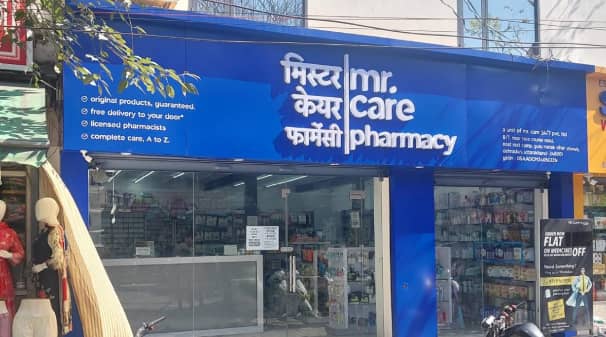
At Mr Care Pharmacy, this philosophy is built into how the team operates. The name is not accidental. Care is the noun, not a modifier. The business exists to provide care, and pharmacy services are how it delivers that care. Flipping that order changes everything about how decisions get made.
The Trust Gap in Modern Healthcare
Trust in healthcare institutions has been declining for years. A 2023 survey from the American Board of Internal Medicine Foundation found that patients increasingly feel rushed, unheard, and uncertain about the advice they receive. Pharmacies sit in an interesting position in this landscape because they are accessible in a way that doctors’ offices often are not. No appointment needed. No referral required. Just walk in.
That accessibility is an enormous opportunity, but only if the pharmacy uses it well. A person who cannot get a same-day appointment with their GP but can walk into a pharmacy and spend ten minutes with a knowledgeable pharmacist is getting real healthcare value. That interaction can catch a problem, answer a question, or simply reduce the anxiety that comes with managing a chronic condition.
Patient-centered pharmacy care is not a marketing term. It is a clinical standard. The World Health Organization and pharmacy associations globally have been pushing toward a model where pharmacists act as full members of the healthcare team, not just dispensers. That shift requires pharmacies to commit to it structurally, not just in their branding.
How Brand Philosophy Shapes Customer Experience
Most pharmacies do not think of themselves as having a brand philosophy. They have a product range, a pricing strategy, and a location. But philosophy drives behavior, and behavior is what customers actually experience.
Here is how that plays out in practice:
When the philosophy is profit-first:
- Staff are measured on transaction speed
- Upselling becomes part of the service model
- Consultations are discouraged because they slow throughput
- Customers are treated as revenue sources
When the philosophy is care-first:
- Staff are measured on patient outcomes and satisfaction
- Recommendations are based on what the patient actually needs
- Consultations are seen as the core product
- Customers are treated as people with real health concerns
The customer experience that results from these two approaches is completely different, even if the physical layout of the store looks the same. Culture is invisible until you feel it.
This is why personalized pharmacy experience matters as a differentiator. In a world where you can order most medications online and have them delivered, a local pharmacy needs to offer something the algorithm cannot. That something is judgment, empathy, and genuine expertise applied to your specific situation.
The Pharmacist as a Healthcare Partner
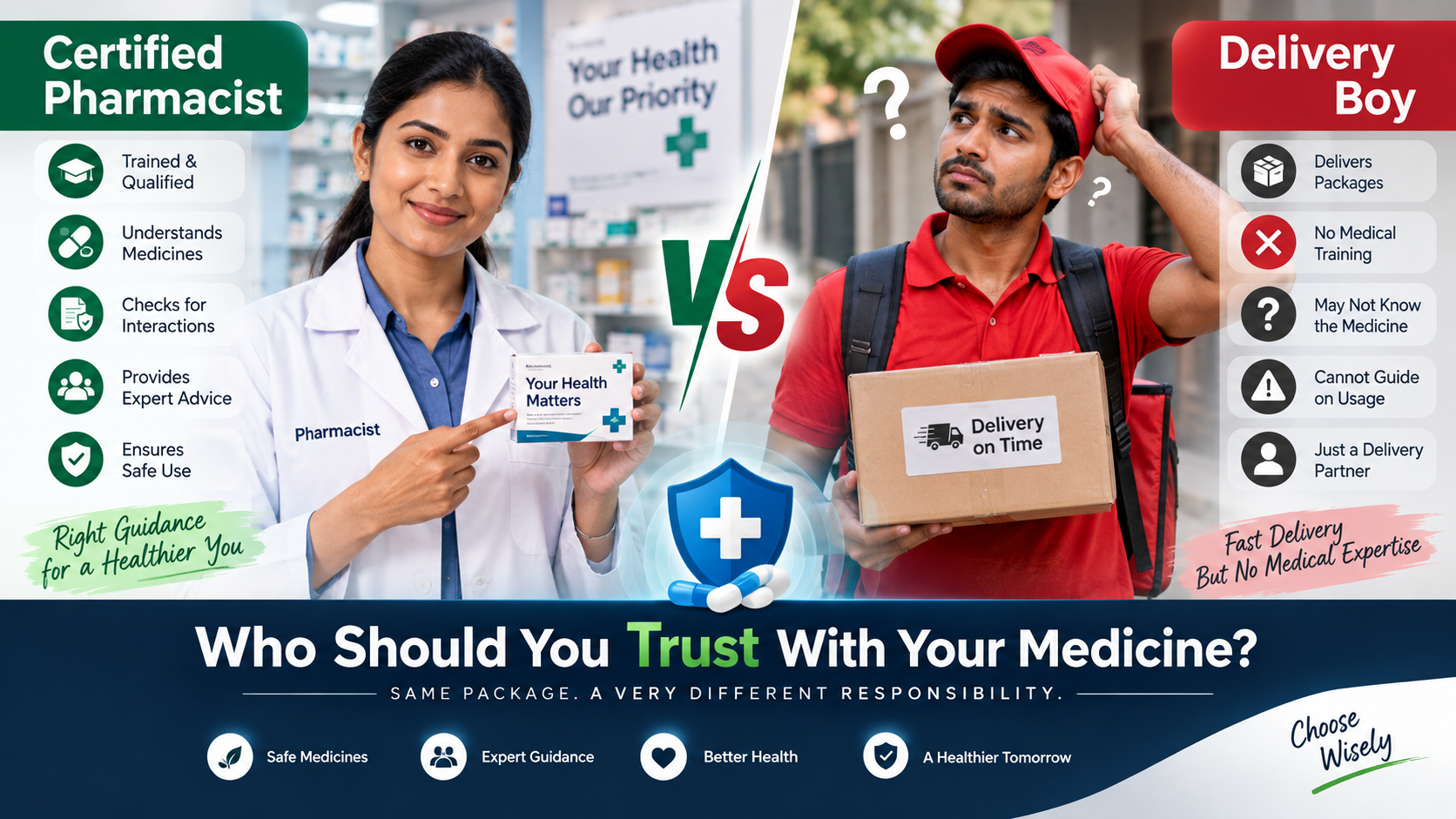
Pharmacists are among the most trained healthcare professionals in the system. A pharmacy degree typically requires five to six years of education, including deep clinical training in pharmacology, therapeutics, and patient counseling. Yet in the traditional retail model, most of that training goes unused on a daily basis.
When a pharmacy operates from a care-first philosophy, it unlocks that training. Pharmacists become the first line of defense for people managing chronic conditions like diabetes, hypertension, and asthma. They can identify when a medication regimen is unnecessarily complex, when a generic alternative might work better, or when a symptom a patient mentions offhand actually warrants a call to their doctor.
This kind of pharmacy-led healthcare support does not require new technology or a bigger budget. It requires permission to do the job properly.
Why This Matters Right Now
Healthcare systems in most countries are under significant strain. GP waiting times are up. Hospital resources are stretched. People are managing more complex medication regimens than ever before, often with less support than they need.
The pharmacy is one of the few parts of the healthcare system with capacity to absorb some of that pressure, but only if it steps into that role. A community pharmacy that operates as a genuine health resource, not just a dispensing point, serves a function that the rest of the system cannot easily replicate.
Mr Care Pharmacy was built on the belief that this is exactly what a modern pharmacy should be. Not a convenience store with a prescription counter, but a place where people get real answers, feel genuinely supported, and leave better equipped to manage their health.
That belief shapes who gets hired, how staff are trained, how consultations are structured, and how success is measured. It is not a feature. It is the foundation.